Why has my waist changed during menopause?
Understand changes in weight and body shape, consider realistic health steps, and avoid promises of a quick belly-fat fix.
In this article
Your clothes fit differently, but your routine hasn't changed much
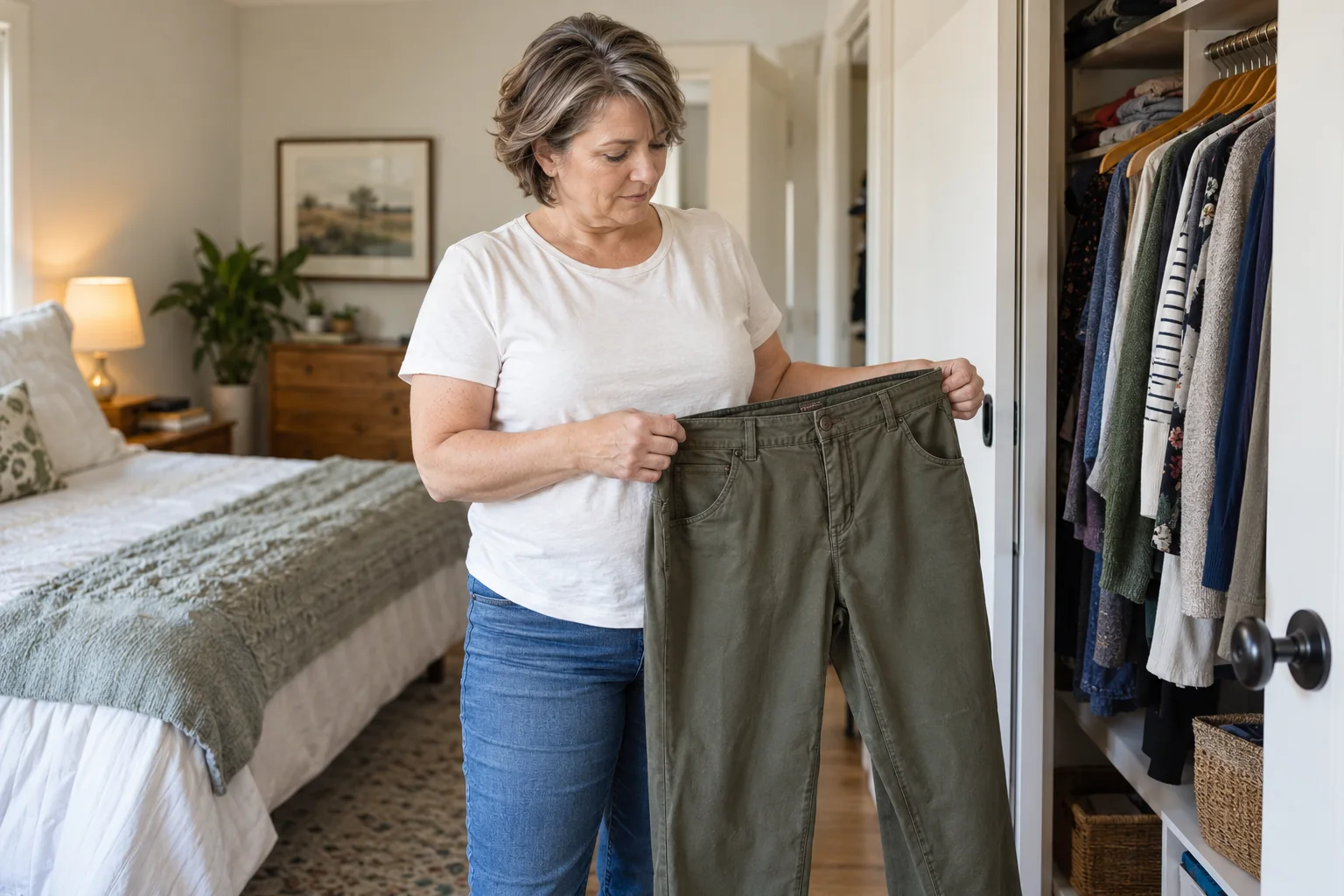
You pull on trousers that used to feel comfortable and wonder what happened. You're still walking. You haven't suddenly changed everything you eat. Yet your waistband feels tighter, and the advice you find online seems to be either “try harder” or “buy this.”
That can be frustrating, especially when you've spent years learning what works for you. You might want an explanation before another plan. You might also want someone to acknowledge that a body change can bother you without turning every conversation into a judgment about your appearance.
Start with what you've noticed. Has your weight changed, your shape changed, or both? Is this a gradual pattern, or a new symptom? Those are different questions.
Weight and body shape aren't the same thing
The Menopause Society's guidance on midlife weight changes describes several influences working together. Hormone changes can affect where fat is stored. Aging, muscle changes, activity, eating patterns and sleep can also matter.
That means “it's all menopause” and “it's only what you eat” are both too simple. It also means a change in your waistband doesn't tell you exactly what is happening inside your body.
You can describe what you've observed without deciding the explanation. “My clothes fit differently over the past year, although my weight hasn't changed much” is useful information. So is “My weight has been rising and my sleep has become much worse.” Your clinician can help decide what deserves a closer look.
Different questions need different answers
| Your question | What to discuss |
|---|---|
| My clothes fit differently | Changes in body shape and what you have noticed. |
| My weight has changed | Your longer-term pattern, health and daily circumstances. |
| I want a treatment | Its purpose, evidence, risks and realistic benefits. |
Body shape and body weight are related, but they are not the same measurement.
Ask a few questions without turning them into a score
Think about the past several months. Have hot flashes or other symptoms interrupted sleep? Has an injury made movement harder? Have work or caring responsibilities changed when you eat or how much time you have for yourself?
These questions aren't a way to find something you've done wrong. They help describe the life in which the change is happening. You can also mention new medicines or health problems at an appointment rather than guessing whether they are responsible.
If tracking weight or food makes you feel worse, you don't have to arrive with a detailed record. A short description of the timeline and what concerns you is a reasonable starting point. Our appointment guide offers a simple way to organize questions.
Choose steps you can actually live with
The Menopause Society recommends balanced eating, regular aerobic activity and strength training, with attention to sleep and stress. These are broad health measures, not a promise that a particular part of your body will shrink on schedule.
Think about a change that fits your circumstances. Could you get help with an exercise plan that accommodates an injury? Would planning a few regular meals make the week easier? Do menopause symptoms need attention because they're disrupting your rest?
If you're already doing many of these things, you haven't failed. A clinician or registered dietitian can help you consider your health goals and whether additional support makes sense. You don't need to keep making your own plan stricter every time you read a different success story.
You can ask a clinician to make the goal more specific than “lose weight.” For example: “What health measures are you concerned about, and how would we know whether our plan is helping?” Ask when to review it and what to do if it feels unsustainable. You can also say that you don't want the appointment to focus only on the scale. Your sleep, comfort, strength and relationship with food belong in the conversation. A useful plan should be something you understand, not just a list of restrictions.
Be careful about what a treatment promises
Hormone therapy is not a direct weight-loss treatment, according to the Menopause Society. Whether it is appropriate for menopause symptoms is a separate conversation about your history, preferences and treatment options. Avoid choosing it because someone promises it will remove belly fat.
Don't assume every new abdominal change is fat, either. If the change feels like a new or persistent symptom, describe that to a clinician rather than treating it as a cosmetic problem yourself.
You can care about health while also working on feeling comfortable in your body. If symptoms affect intimacy, read about comfort during sex or changes in desire. For now, bring one clear question to your next conversation: “What might explain this change, and what would be a realistic way to look after my health?”

Sources & further reading
Read our editorial standards.