Low sex drive after 40: a guide for men
Not feeling as interested in sex lately? You can explore what has changed without judging yourself or jumping to conclusions.

In this article
You still love your partner. So why don’t you feel like sex?
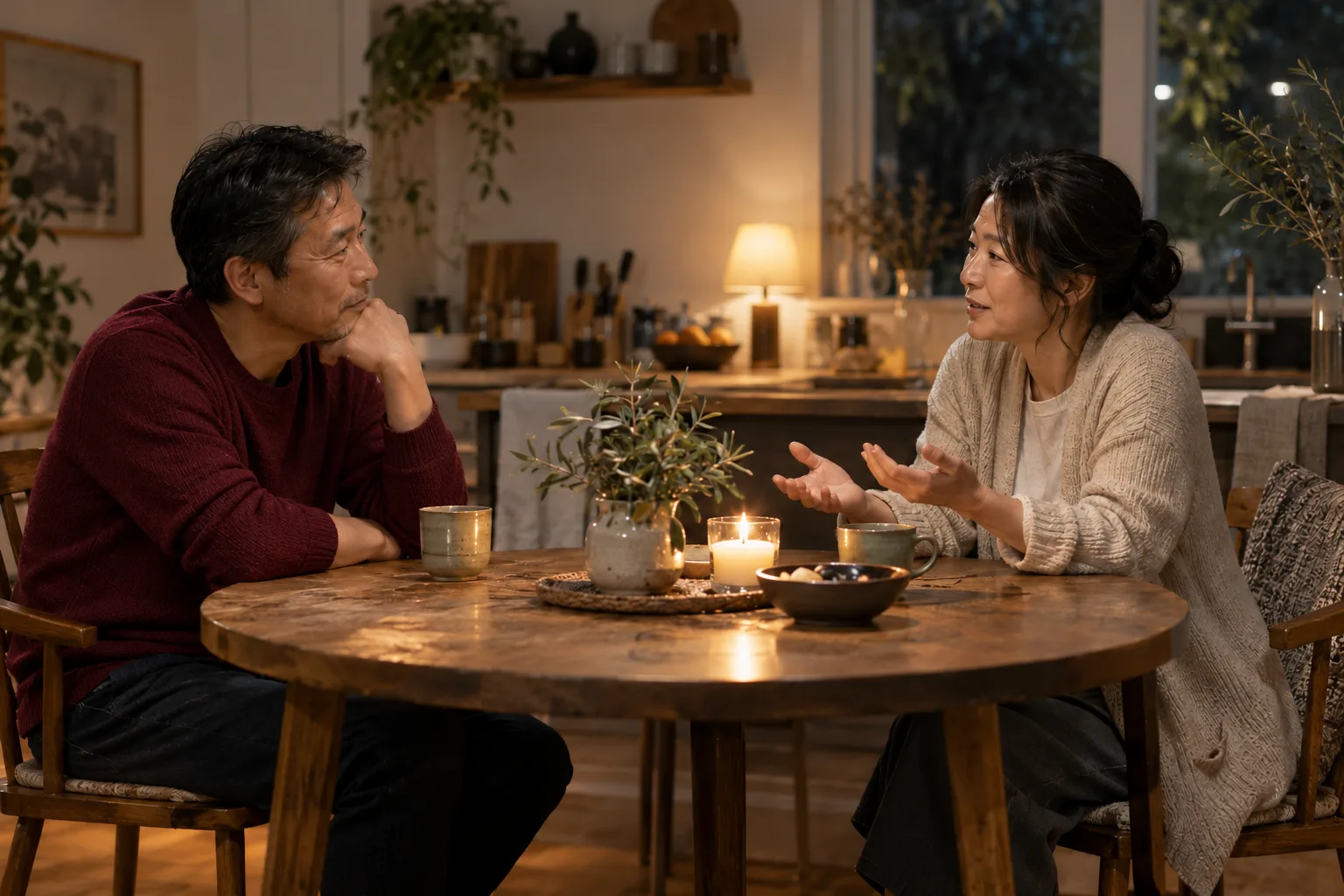
Maybe you used to think about sex often. Now, by the time you get into bed, you just want to sleep. Your partner reaches for you, and you feel torn. You don't want to hurt them. But you don't want to pretend, either.
Or maybe you're single, and you've noticed you aren't as interested as you used to be. You wonder whether this is just part of getting older.
Then there's that thought you might not say out loud: “I'm a man. Aren't I supposed to want sex?”
You don't have to fit that expectation. What matters is how you feel about the change, and whether you'd like help understanding it.
Is anyone else dealing with this?
Yes, men do report losing interest in sex. A British study published in 2017 found that 15% of the men surveyed reported a lack of interest lasting at least three months in the previous year.
That study used information collected from 2010 to 2012. It included sexually active adults aged 16 to 74, so it wasn't specifically about men over forty. The number doesn't tell us what's happening in your body, and it isn't a diagnosis.
But it does challenge the idea that men always want sex. If your interest has changed, you aren't the only person who has noticed that in himself.
Low interest is something others report too
Men reporting low interest
4,839 men in this analysisEach dot represents one percentage point; the exact estimate is shown at left.
Lack of interest lasting at least three months in the previous year. British Natsal-3 participants aged 16–74 with a sexual partner in the past year; data collected in 2010–2012. Not a midlife-only estimate or a diagnosis. Graham et al., BMJ Open (2017).
Could it be low testosterone?
It could be something to discuss, but low desire alone doesn't establish low testosterone. The Endocrine Society says a diagnosis requires symptoms along with at least two low early-morning testosterone measurements.
So an advertisement, an online checklist, or one test result can't give you the whole answer.
You can ask your doctor, “Would testing make sense for me? What would the results help us decide?” You don't have to arrive asking for a particular treatment. Start by explaining what has changed and what you'd like help with.
What else could be going on?
The NHS lists several possible contributors, including stress, depression, relationship problems, some medicines, alcohol, and certain health conditions. Erection difficulties can also be involved.
Try asking yourself a few simple questions. Have I lost interest in sex, or am I avoiding it because I'm worried about my erection? Do I feel less interested all the time, or mainly in certain situations? Did anything change around the time this started?
You don't need to solve those questions yourself. They can help you describe the problem more clearly. “I want sex, but I'm worried about what will happen” gives your doctor different information from “I hardly feel interested anymore.”
How do I tell my partner without hurting them?
You can't control exactly how your partner feels, but you can help them understand instead of leaving them to guess.
Try, “I've noticed my interest in sex has changed. I'm still figuring it out, and I want to talk about it with you.” If you're still attracted to them, say that too. Don't offer reassurance that isn't true just to end an uncomfortable conversation.
Then explain what kind of closeness you'd welcome. You might say, “I'd love to cuddle, but I don't want that to feel like a promise of sex.”
Give your partner room to talk about their feelings as well. Listening doesn't mean you owe them sex. It means you're trying to understand each other.
What should I do next?
If the change bothers you, book an appointment. Take a short note about when it began, any other changes you've noticed, and the medicines or supplements you use. If you suspect a prescription, ask the prescriber about it. Don't stop it on your own.
You could say, “My interest in sex has dropped, and I miss it. What could be contributing?” Or, “I'm comfortable with less sex, but the difference between me and my partner is difficult.” Those are different concerns, and both deserve to be heard.
Your next step doesn't have to be getting back to a certain number of times a week. It might simply be understanding what's changed, having an honest conversation, or feeling less alone with the question.
Sources & further reading
- NHS — Low sex drive ↗
- Graham et al., BMJ Open (2017) — Lack of interest in sex in the Natsal-3 survey ↗
- Endocrine Society — Hypogonadism in men ↗
Read our editorial standards.